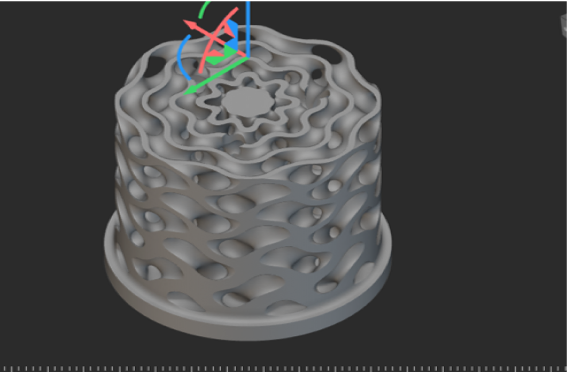
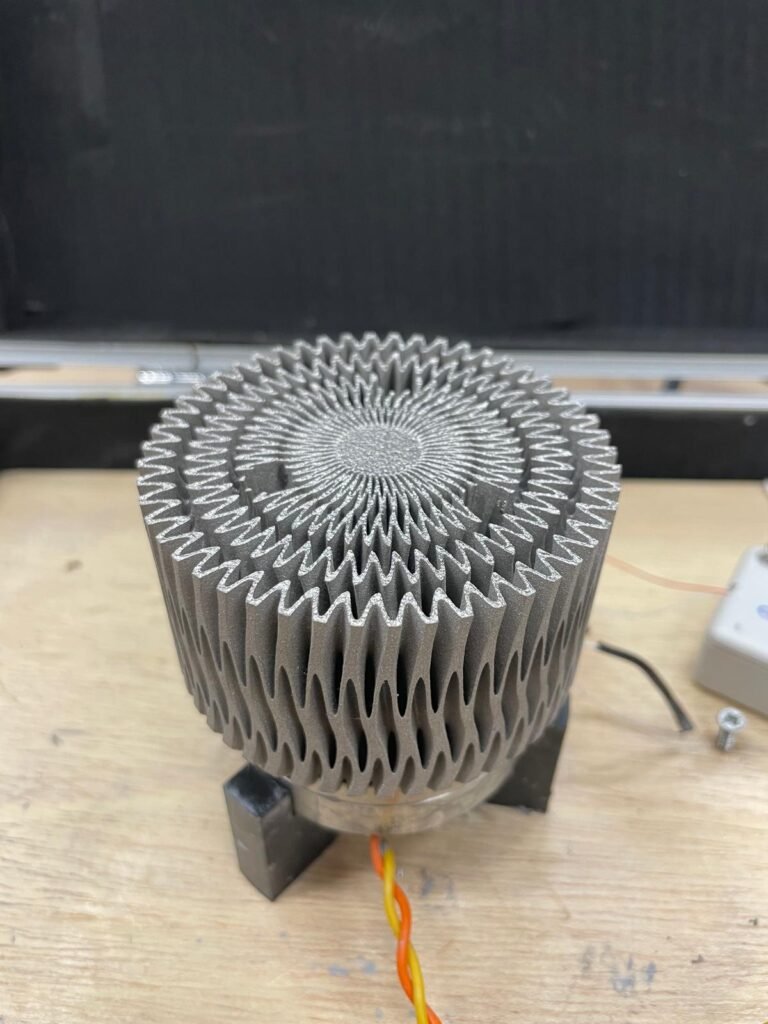
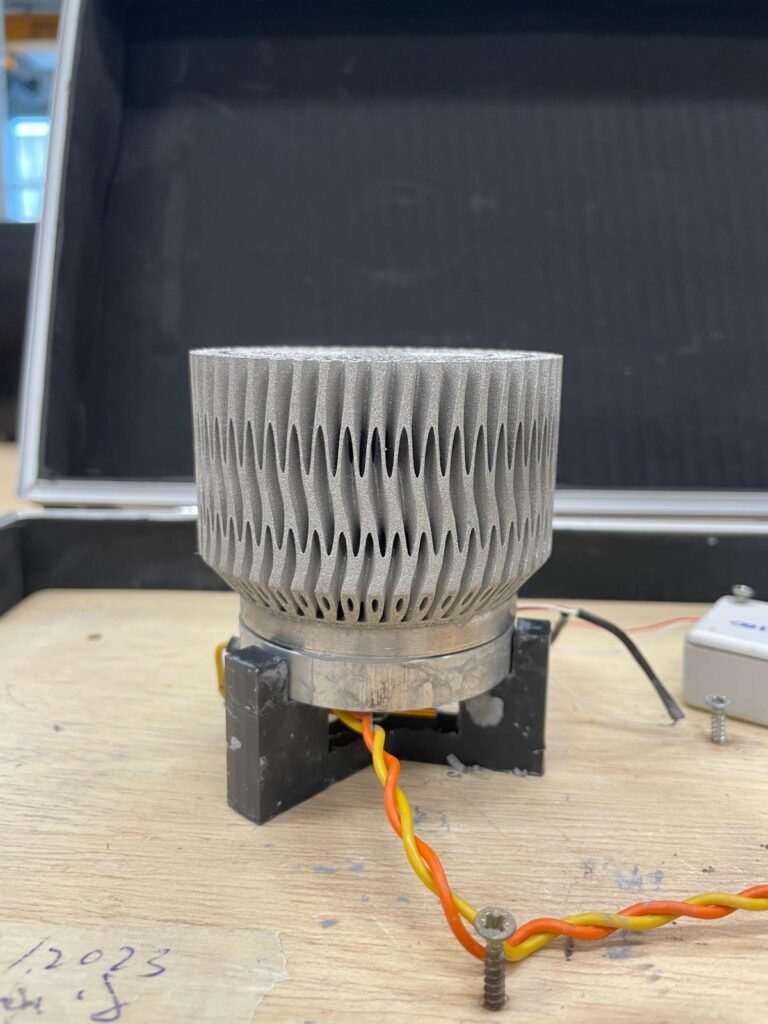
A gyroid lattice heat sink designed to enhance thermal performance through increased surface area and efficient fluid interaction.
This project explored innovative heat sink designs to enhance thermal dissipation for electronic applications. Multiple iterations of the heat sink were simulated and refined using nTopology to identify the most effective gyroid geometry. The final design was metal 3D-printed in stainless steel—the only available printer material—within a maximum print volume of 100 cm³. Physical testing confirmed effective thermal management, with a maximum core temperature of 65.7 °C. This investigation demonstrates the potential of complex lattice structures and iterative design processes to create more efficient heat sinks for electronics using additive manufacturing
Fig 1. Iteration design
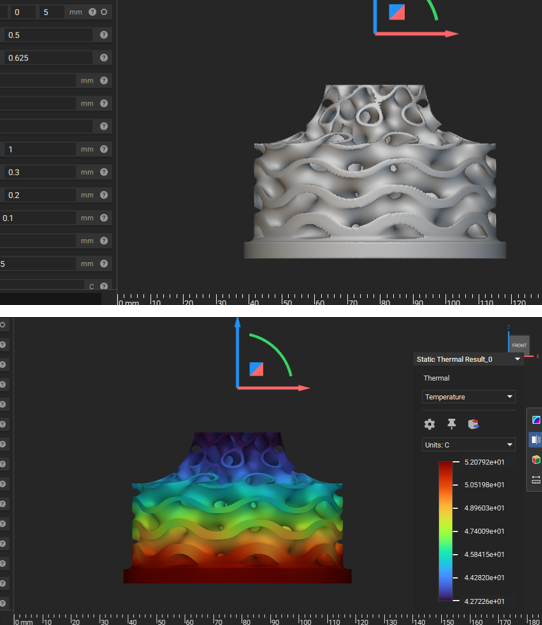
Fig 2. Iteration design
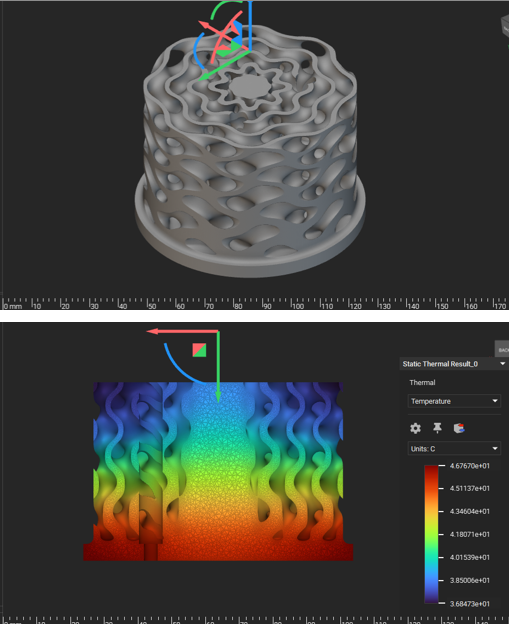
Fig 3. Iteration Design
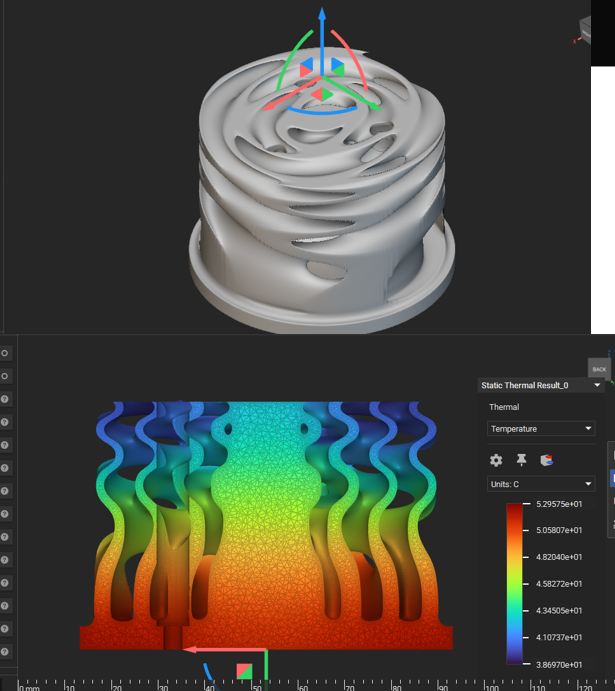
Fig 4. Final selected design.
The initial design selected for printing was the iteration shown in Fig. 2. However, after importing the model into the slicing software, it became apparent that the overhangs exceeded the limits for Selective Laser Melting (SLM), and conventional support structures were not feasible due to the inability to remove them during post-processing. This highlighted the need for design adjustments to ensure manufacturability while maintaining the desired gyroid geometry.
Experimental test
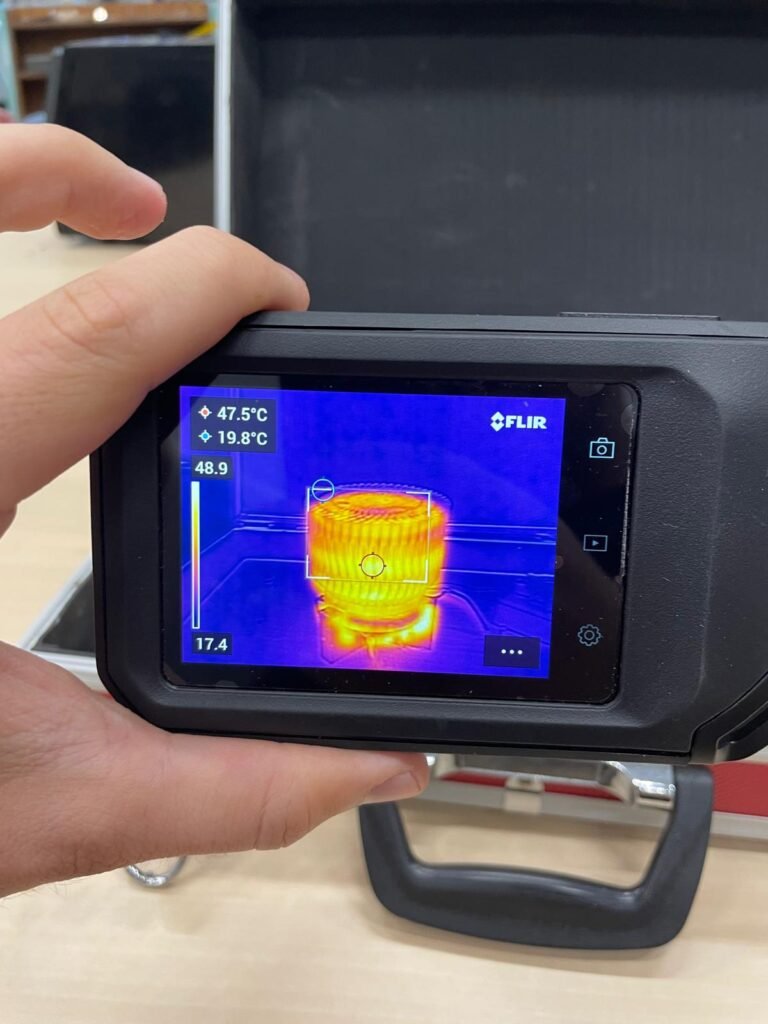
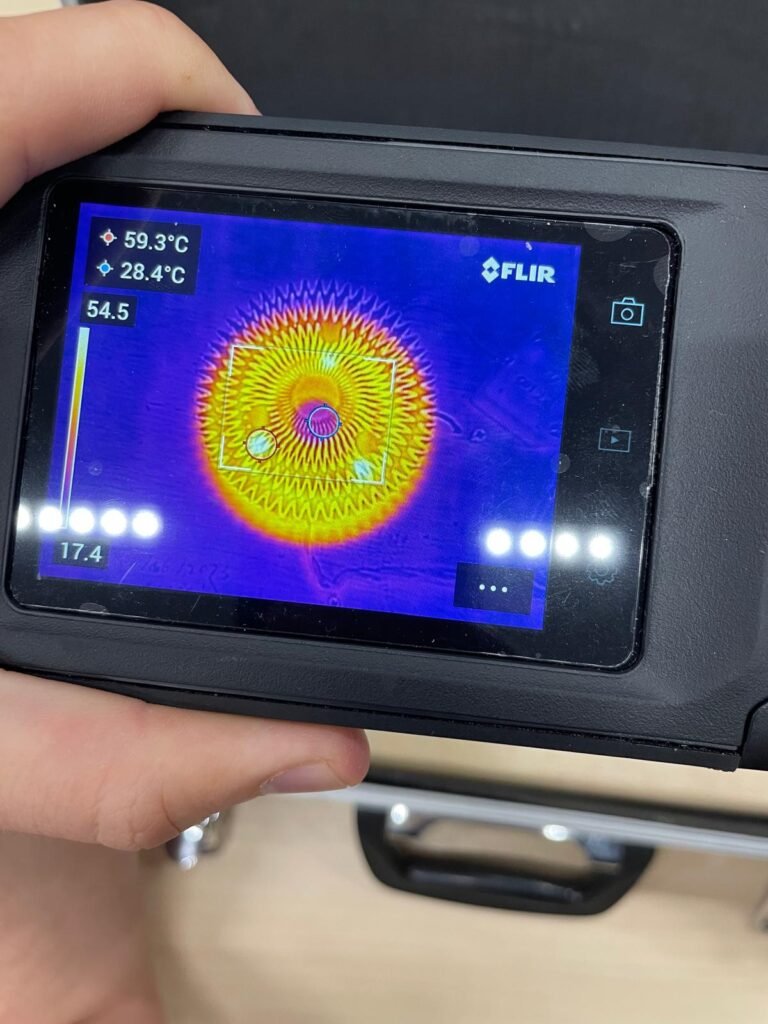
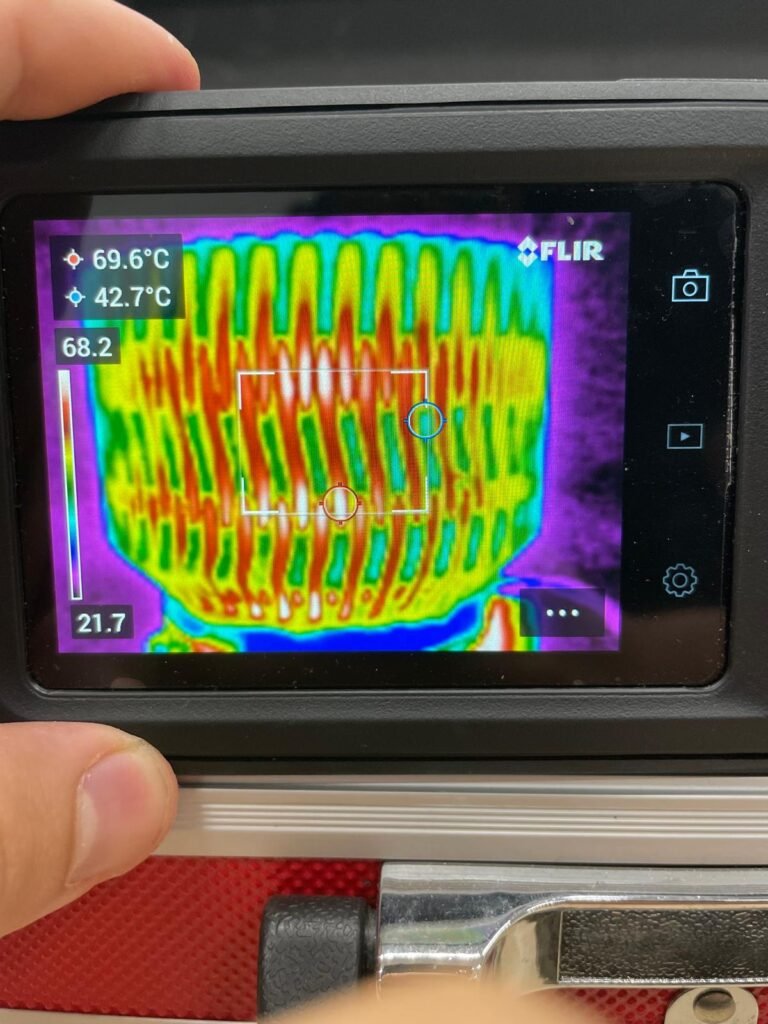
The thermal performance of the heat sink was evaluated using a dedicated test rig. A 10 W resistor served as the heat source, and a temperature sensor was positioned at the core of the test rig base to monitor the heat conducted through the heat sink. Additionally, IR cameras were employed to measure surface temperatures across the heat sink. Tests were conducted at an ambient temperature of 21 °C, and measurements were recorded once steady-state conditions were reached. To ensure good thermal contact, thermal paste was applied between the heat sink and the test rig base, and the assembly was secured using three screws. This setup allowed for accurate assessment of the heat sink’s ability to dissipate heat under controlled conditions.